Uncategorized

User-Generated Content
Uncategorized

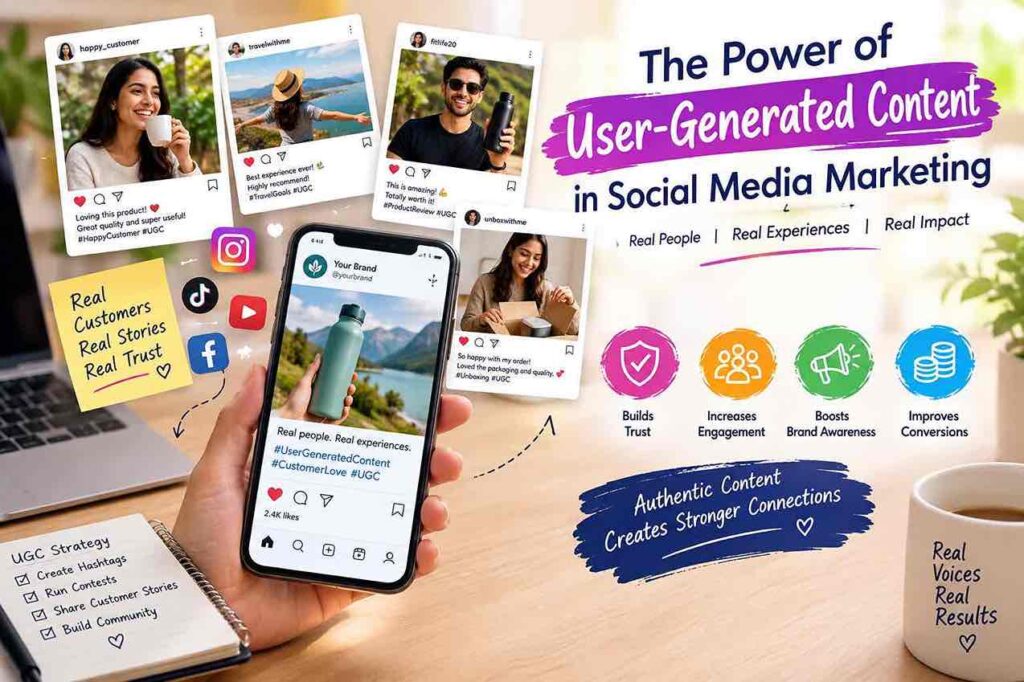
The Power of User-Generated Content in Social Media Marketing

Introduction Over the past few years, social media marketing has undergone tremendous transformation. Consumers receive numerous advertisements daily. Thus, it becomes difficult for the brands to attract customers’ attention and gain their trust. Therefore, companies strive to find some genuine ways to establish communication with their audience. User-Generated Content is one of the best solutions. The modern consumer values recommendations of real people rather than conventional advertisements. No matter if it is a customer review, product picture, testimonial, unboxing video, or any other kind of post on social media — User-Generated Content proves that the brand is credible. Brands who use User-Generated Content successfully will benefit greatly in 2026. What Is User-Generated Content? Any content that is not produced by the brand but rather the customer, followers, or user is termed as User-Generated Content. Examples of such contents include: Unlike other advertisements, this kind of content is produced by the users themselves. Why User-Generated Content Matters Current consumers need to be aware of what is true and real. Most consumers do research online about the product prior to purchasing. When potential customers encounter positive user-generated content, they have faith in the brand as the content is created by real customers and not advertisements. Builds Trust Trust is one of the main elements that affects purchasing decisions. Consumers trust other consumers more than they trust ads. Creates Authenticity Authentic content comes across as more natural. This allows the brand to look like it is authentic and consumer-driven. Affects Purchase Decisions The experience of the consumer is one of the main deciding factors for purchases. Advantages of User-Generated Content on Social Media Marketing Credibility of the Brand The most important benefit of User-Generated Content is credibility. When customers share positive experiences voluntarily, it proves that they are happy about their experience. Potential customers perceive the customers’ experiences as being unbiased and therefore credible, which makes them more credible than traditional ads. Greater Engagements Social media users engage more with authentic rather than promotional content. The benefits are: It increases the performance of the content. Affordable Marketing Creating professional marketing campaigns costs money. Since customers create User-Generated Content, companies have an advantage of receiving marketing materials without spending a lot of money on creating them. Community Building By engaging customers in sharing experiences, a company creates a community of people who appreciate the product or service. Effect on Consumer Behavior Social proof plays a major role in consumer behavior. Whenever consumers notice that other people have been enjoying a particular product or service, they tend to be intrigued with it. This phenomenon works in the same way that the User-Generated Content works. For instance: All these forms of content make consumers more confident when making their decisions to purchase something. User-Generated Content Types There are several forms of user-generated content that businesses can use for various reasons. Customer Reviews Among the most valuable content are reviews since they affect customers’ buying decisions. Testimonials Testimonials give a better understanding of how satisfied the customers are and whether products work as expected. Brand Mentions on Social Media Many customers include brand mentions while sharing content online. This increases brand awareness and visibility. Product Photos Real-life photos of products help customers relate to them. Video Content Content in the form of videos such as tutorials and unboxing videos tend to have high engagement levels. How User Generated Content Enhances Social Media Performance The social media websites emphasize authentic and engaging content. As user generated content usually engages well, it can be used for improving performance on different platforms. Improved Organic Reach Authentic content is more likely to engage and thus reach more people in an organic manner. Improved Customer Trust Real customer experiences create better trust among customers than any promotional content. Improvement in Brand Awareness If customers share the content in their networks, the brands will get more awareness from it. Increased Engagement Strategies to Facilitate User-Generated Content For crafting an effective strategy, there should be an engagement of customers. Branding Hashtags Specific hashtags help customers to share their experience with the brand and also enable the brand to find the content relevant to it. Conducting Contests & Campaigns The social media contest prompts the customers to produce content relevant to the brand. Highlighting Customer Experiences Sharing customer stories encourages other customers to participate. Ask for Reviews Customers who are satisfied with the brand can be easily encouraged to give their reviews. Community Building Active community building helps brands to get naturally. Best Practices for Using User-Generated Content There are some key practices that organizations should undertake in order to ensure success. Ask for Permission Always ask for permission to post customer content. Provide Credit Make sure to give proper credit where appropriate to content creators. Be True to Your Brand Make sure the content aligns with your brand’s values and messaging. Keep It Real Don’t edit too much of the customer content, as being real is the greatest advantage of user-generated content. Business Challenges That Could Arise While there are plenty of good points about customer-generated content, there are challenges as well. Quality Not all the content will be up to brand specifications. Negative Content The business may have to deal with negative content that requires professional responses. Ownership of the Content The brand should respect the creators’ rights and permissions. Issues with Consistency The amount and quality of content may vary based on customer engagement. The Future of User-Generated Content With consumers valuing authenticity now more than ever, user-generated content is going to remain an important concept. Future trends include: Firms focusing on authentic customer interaction are going to be in much better positions as far as the changing digital marketing environment is concerned. Conclusion In the modern competitive social media space, user-generated content has emerged as one of the best available methods of establishing trust, boosting engagement and increasing brand credibility. Users are known to trust real-life experiences of other customers than the ones provided by traditional advertising. Businesses can boost
Answer Engine Optimization
Uncategorized

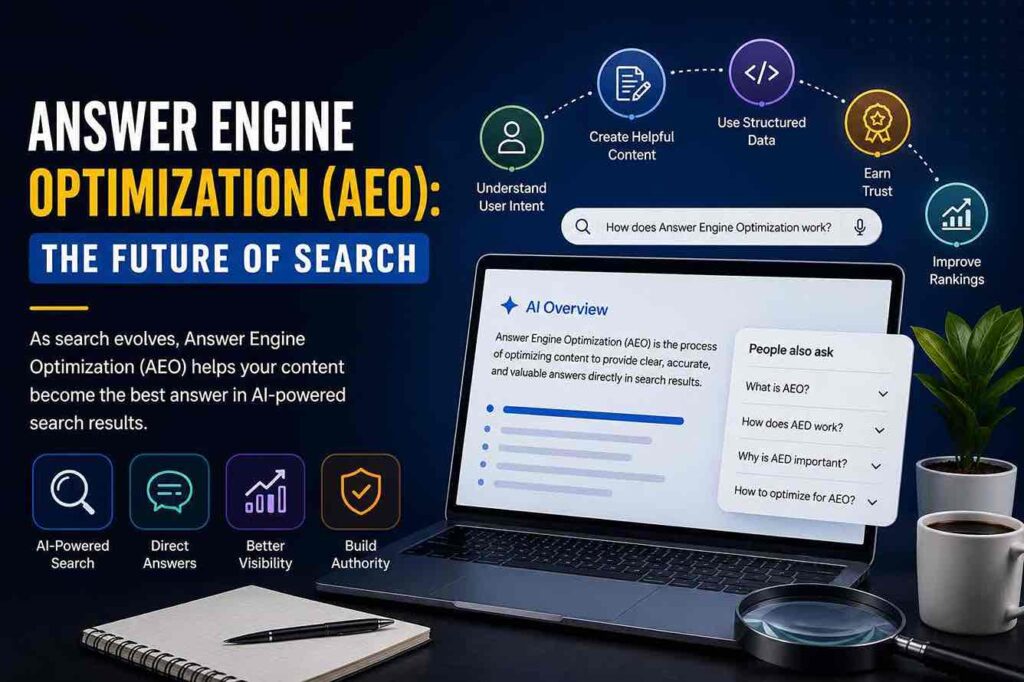
Answer Engine Optimization (AEO): The Future of Search in 2026

Introduction Searching for information on the internet is now moving at an accelerated pace. For a very long time, traditional SEO was aimed at ensuring that websites get a better ranking on search engine result pages. With the advent of artificial intelligence, the process has been revolutionized, leading to the emergence of Answer Engine Optimization. Through various AI search engines such as Google AI Overviews, ChatGPT, Gemini, Perplexity AI, and voice assistants, users are now being provided with direct answers as opposed to navigating through several websites. With this evolution in place, Has become one of the most important digital marketing strategies in 2026. What is Answer Engine Optimization? Answer Engine Optimization is the optimization of content to allow AI-based search engines to easily interpret, retrieve, and show information in the form of answers to user questions. While conventional SEO is concerned about getting higher ranks in Google search, concerns about answering questions asked by users using AI-based search. The principle of Answer Engine Optimization is straightforward – make your content the ultimate source of information on a particular question. With the development of AI-based search engine technologies, will become an indispensable part of every digital marketing strategy. Why Answer Engine Optimization Is Important The significance of Answer Engine Optimization will only increase due to the change in user behavior. The modern internet user is looking for immediate results. They do not want to visit several sites to get their questions answered. The AI-driven searches provide these needs of the internet user. This is precisely why Answer Engine Optimization becomes significant. Some of the key reasons are: By implementing today, companies are securing themselves for tomorrow. SEO vs Answer Engine Optimization There have been many discussions regarding whether AEO will take over SEO. It will not. Traditionally, SEO includes: In contrast, (AEO) involves: The future is about those companies which use a combination of both SEO and (AEO) techniques. How Answer Engine Optimization Works For marketers, it is vital to understand how works. When users type their questions, AI-based services look through many web pages and select the most relevant and credible information. Answer Engine Optimization is affected by a few aspects, such as: 1. Content Quality The quality of content is the main part . The content must be valuable, credible, and extensive. 2. User Intent It is vital to comprehend the intent of users to optimize answers effectively. Your content must directly provide answers to all questions of users. 3. Structured Content Using headings, bullet points, numbered lists, and FAQs can help in optimizing answers because it is easier for AI to get information. 4. Authority Sites that are authoritative are more likely to appear on answer engines. It means that trust is also one of the components of AEO. The Importance of E-E-A-T for Answer Engine Optimization E-E-A-T by Google is a very important concept when it comes to AEO. Experience This must indicate practical experience of the author. Expertise The author needs to display expertise on the subject matter. Authoritativeness The website needs to develop its own authority in the industry. Trustworthiness One of the most important factors of ranking is trust. Sites that use the concept of E-E-A-T have a higher chance of succeeding in the approach. Answer Engine Optimization Benefits There are many reasons why you should go for Answer Engine Optimization. Greater Search Visibility Among the many benefits , search visibility comes first. Enhanced Brand Authority Your brand authority is boosted if you get featured in AI answers. User-Friendly Strategy Answer Engine Optimization aims at giving users what they are looking for. Future-Proof Marketing With the growth of AI search, Answer Engine Optimization becomes more relevant. Answer Engine Optimization Best Practices Companies must use these best practices to optimize their Answer Engine Optimization results. Develop Quality Content Make sure that your content is helpful to the users. Answer Queries Good answers will help you perform better . Leverage FAQ Pages FAQ pages will be great for Answer Engine Optimization as they suit the behavior of searchers. Voice Search Optimization Answer Engine Optimization and voice search have a lot in common as they both target conversational queries. Use Structured Data Schema markup will be helpful for the better understanding of content by search engines. Topical Authority Building It means developing several pieces of content regarding one topic. How Businesses Should Prepare for the Future Future of search will largely depend on artificial intelligence. Businesses should prepare themselves through the following: Organizations that adopt these strategies will have a competitive edge. Expert Opinions According to industry experts, Answer Engine Optimization is set to be one of the most important digital marketing skills in the future. With the emergence and evolution of platforms like Google, ChatGPT, Gemini, and Perplexity, Answer Engine Optimization will assist businesses in staying ahead in the age of artificial intelligence. is not meant to replace SEO; rather, it complements it. Conclusion The search industry is on the brink of a new age driven by artificial intelligence. In order to keep up with the times, companies will have to change their approach to the use of search engines and the ways in which they operate. Answer Engine Optimization is not just something innovative and interesting anymore. It is something that companies should consider in order to become more visible through AI-driven search engines. E-E-A-T, user intent, structured data, and high-quality information are all things that matter in this new world.   BLOGS

Uncategorized

AI Marketing vs Traditional Marketing: Which is Better in 2026?BLOG

AI Marketing vs Traditional Marketing: Which is Better in 2026? Introduction Businesses that once depended on newspapers, radio advertisements, and billboards now have access to powerful AI-driven tools that can analyze customer behavior, automate tasks, and improve campaign performance. As technology continues to advance, marketers are increasingly exploring new ways to reach the right audience at the right time. This shift has sparked an important discussion: AI Marketing vs Traditional Marketing. Which approach delivers better results? Is artificial intelligence replacing traditional methods, or do both still have a place in modern marketing? The answer depends on several factors, including business goals, target audience, budget, and industry. By understanding the strengths and limitations of AI Marketing vs Traditional Marketing approaches, businesses can make informed marketing decisions and create more effective campaigns. Understanding Traditional Marketing Traditional marketing refers to promotional methods that existed before the growth of digital platforms. These methods include television commercials, radio advertisements, newspaper ads, magazine promotions, brochures, flyers, and billboards. For many years, traditional marketing was the primary way businesses introduced their products and services to potential customers. Even today, AI Marketing vs Traditional Marketing many well-known brands continue to use traditional advertising to increase visibility and strengthen their brand presence. Advantages of Traditional Marketing Traditional marketing remains valuable for several reasons: ● Builds trust and familiarity among consumers. ● Helps businesses reach local audiences. ● Creates strong brand awareness through physical visibility. ● Effective for audiences who spend less time online. ● For example, a billboard placed on a busy highway can attract attention from thousands of people every day. Similarly, television advertisements can help brands reach large audiences within a short period. Challenges of Traditional Marketing While traditional marketing offers several benefits, it also has limitations: ● Advertising costs can be high. ● Audience targeting options are limited. ● Campaign performance is difficult to measure accurately. ● Making changes to campaigns often takes time. These challenges have encouraged many businesses to explore digital and AI-powered marketing solutions. What is AI Marketing? AI marketing involves the use of artificial intelligence technologies to improve marketing activities. Instead of relying mainly on assumptions or broad audience groups, AI uses data to understand customer behavior and support better decision-making. Today, AI is widely used across various marketing functions, including: ● Content creation ● Email marketing automation ● Customer segmentation ● Social media management ● Chatbots and customer support ● Advertising optimization ● Predictive analytics The growing adoption of AI has made AI Marketing vs Traditional Marketing one of the most discussed topics in the digital marketing industry. AI Marketing vs Traditional Marketing: Key Differences AI Marketing vs Traditional Marketing approaches aim to attract customers and increase sales, they differ significantly in how they operate. Audience Targeting A major difference in AI Marketing vs Traditional Marketing is how businesses identify and reach potential customers. A newspaper advertisement, for example, reaches everyone who reads that publication. AI marketing uses customer data to target specific groups based on factors such as: ● Age ● Location ● Interests ● Online behavior ● Purchase history This level of precision helps businesses communicate with people who are more likely to be interested in their products or services. Advantage: AI Marketing Personalization Modern consumers expect personalized experiences from brands. Traditional marketing usually presents the same advertisement to every viewer. AI marketing, however, allows businesses to tailor content based on individual customer preferences. For example, online shopping platforms often recommend products based on previous purchases or browsing behavior. Streaming services also use AI to suggest content that matches user interests. This personalized approach can improve engagement and customer satisfaction. Advantage: AI Marketing Cost Efficiency Budget is a major consideration for any marketing strategy. Traditional advertising methods such as television commercials and billboards often require significant investment. Smaller businesses may find these options expensive. AI-powered marketing campaigns can often be launched with lower budgets while still reaching highly targeted audiences. Businesses can also monitor campaign performance and make adjustments quickly. For many organizations, this makes AI Marketing vs Traditional Marketing an important cost-related decision. Data and Performance Tracking One area where AI marketing has a clear advantage is performance measurement. Traditional marketing provides limited information about how audiences interact with advertisements. AI-powered tools can track: ● Website visits ● Conversion rates ● Customer engagement ● Click-through rates ● Return on investment (ROI) Access to this data helps marketers understand what is working and what needs improvement. Advantage: AI Marketing Customer Interaction Traditional marketing primarily focuses on delivering messages to audiences. AI marketing allows businesses to interact directly with customers through: ● Chatbots ● Automated messaging ● Personalized email campaigns ● AI-powered support systems ● These tools can provide instant responses and improve the overall customer experience. Advantage: AI Marketing Brand Visibility While AI marketing offers many benefits, traditional marketing still performs strongly when it comes to large-scale brand awareness. Television advertisements, outdoor billboards, and print media can expose a brand to a wide audience and create lasting impressions. This is particularly useful for companies launching new products or running nationwide awareness campaigns. Advantage: Traditional Marketing Real-World Examples of AI Marketing Many successful businesses already use AI as part of their marketing strategy. Netflix Netflix analyzes viewing behavior to recommend movies and TV shows that match user preferences. Amazon Amazon uses AI to suggest products based on customer interests and purchase history. Spotify Spotify creates personalized playlists by studying listening patterns and user preferences. These examples demonstrate how AI is helping brands deliver more relevant and engaging customer experiences. Is Traditional Marketing Still Relevant? Despite the rapid growth of AI technologies, traditional marketing has not disappeared. In many situations, traditional marketing remains highly effective. Local Marketing Campaigns Local businesses often benefit from community events, newspaper advertisements, and outdoor promotions. Building Trust Physical advertising materials can create credibility and strengthen brand recognition. Reaching Diverse Audiences Not every customer spends significant time online. Traditional marketing helps businesses connect with audiences who may not actively engage with digital channels. For these reasons,

Scroll to Top